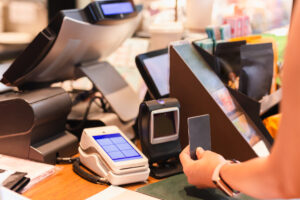
Nobody wakes up excited to think about their POS system. It’s not the glamorous part of running a business. You’re focused on your customers, your staff, your products, and keeping everything moving. The last thing on your mind is whether your checkout software is quietly holding you back.
But here’s what a lot of retail and F&B owners eventually discover: the system they stopped thinking about is exactly the one causing the most friction. The sluggish checkouts. The inventory that never seems quite right. The reports that take forever to pull, or worse, don’t exist at all. It creeps up slowly, and by the time it becomes obvious, the damage is already done.
If you’ve been running on the same POS for years and something feels lacking, you’re probably not imagining it. This article will help you figure out what’s actually going on, what it’s costing you, and what a smarter path forward looks like.
5 Signs Your POS System Is Past Its Prime
The decline of an old POS rarely announces itself loudly. It’s more like a slow leak; small annoyances that pile up until one day you realise your technology is working against you more than it’s working for you. Here’s what to watch for.
1. It picks the worst moments to act up
Friday evening rush. A packed lunch service. That one Saturday when every table is full, and the queue is out the door. Of course, that’s when your system decides to freeze. If crashes and slowdowns have become a regular part of your operation, your team has probably learnt to work around them without even saying anything anymore. That’s not resilience. That’s a red flag hiding in plain sight.
2. Nothing talks to anything else
Your POS is over here. Your accounting software is over there. Your e-commerce store lives somewhere else entirely. And every day, someone on your team is manually bridging those gaps by copying data, reconciling numbers and fixing discrepancies. It’s tedious, error-prone and an invisible drain that doesn’t show up anywhere obvious until you sit down and add up the hours.
3. You find out you’re out of stock when a customer tells you
That’s a rough moment. And if it’s happened more than once, it’s not bad luck, it’s a system problem. Real-time inventory tracking should be a baseline feature at this point, not a luxury. If your stock counts are happening manually at the end of the week, or you’re constantly over-ordering to compensate for the uncertainty, your POS is costing you money in ways you might not even be tracking.
4. The reporting is either useless or nonexistent
Your business generates valuable data every single day. Sales patterns, peak hours, top-performing products, slow movers. It’s all there. But if your POS can’t surface it in a way that’s useful, you’re essentially flying blind. A lot of business owners in this situation end up making decisions based on instinct alone, which works sometimes, but it’s not a system you can scale.
5. Your vendor has gone quiet
No updates. No new features. Support tickets that go unanswered for days. When a POS vendor stops investing in their product, the clock starts ticking. Security gaps go unaddressed. Hardware compatibility becomes an issue. And eventually, you’re running critical business operations on software that nobody is actively maintaining. That’s a risk most business owners don’t fully appreciate until something actually breaks.
Two or more of these are hitting close to home? It’s worth taking that seriously.
What It’s Costing You to Do Nothing
This is the part of the conversation that tends to surprise people. Because staying with your old system feels like the safe, affordable option, and that it doesn’t come with an invoice, it slips under the radar. But the cost is very real—it just shows up in different places.
Think about the customers who left because your checkout was too slow. Not every person in a long queue is going to wait it out. Some of them will silently decide it’s not worth it and walk away. You’ll never know exactly how many sales you lost that way, which is almost worse.
Think about your team. How much of their shift is spent on workarounds, manually updating stock, re-entering sales data, explaining system quirks to new staff who can’t figure out why things work the way they do? That time costs money. And beyond the payroll math, there’s a morale element here too. Good employees grow frustrated in environments where the tools make their jobs harder instead of easier.
Then there’s the inventory problem. Over-order because you don’t have accurate data, and you’re tying up cash. Under-order because you didn’t catch a low-stock warning in time, and you’re turning customers away. Both outcomes are avoidable, and both quietly erode your margins over time.
The decision to do nothing isn’t neutral. It’s a choice, and it carries real consequences.
What a Modern POS System Should Actually Look Like
Before evaluating anything new, it helps to get clear on what you do need. A modern management system isn’t just a faster version of what you already have. It changes how your whole operation runs.
- Real-time inventory means the moment a sale is made, your stock count updates. There’s no need for manual audits, and produces no surprises. Crucially, there’s no customer asking for something you don’t have.
- Multi-outlet management brings everything under one roof: stock transfers, performance comparisons, team oversight, all accessible from a single dashboard, whether you’re on the floor or not.
- Loyalty and promotions built in means you’re not juggling a separate platform to track customer points or run a discount campaign. It just happens, automatically, as part of the regular transaction flow.
- Cloud-based reporting means your numbers are available to you wherever you are, on whatever device you have. You check in on a slow Tuesday afternoon and immediately know whether it’s tracking below last week or running ahead.
- Clean integrations with accounting tools, e-commerce platforms, and delivery apps mean data flows where it needs to go without anyone having to manually move it. That alone can save hours every week.
This is what a POS system upgrade should deliver. Not just speed, but actual operational clarity.
The PSG Grant Makes This More Achievable Than You Might Think
Here’s something that changes the conversation for a lot of Singapore SMEs: you don’t have to cover the full cost of upgrading on your own.
The Productivity Solutions Grant (PSG) is a Singapore government initiative designed to help local businesses adopt pre-qualified technology solutions, with the government funding a significant portion of the eligible costs. For small and medium-sized businesses, that’s a meaningful difference.
Suntoyo offers pre-qualified POS solutions under the PSG scheme. It’s already met the government’s standards for functionality and business value, which also means it’s been independently assessed, not just self-certified. If your business is eligible, the financial barrier to upgrading is considerably lower than you might have assumed.
If cost has been sitting in the back of your mind as the main reason to wait, this is worth looking into before you make any decisions.
So, Is It Time?
Here’s the thing about the “right time” to upgrade: it almost never feels obvious in the moment. There’s always a busy period coming up, a reason to push it to next quarter, a voice saying it still works (mostly).
But most business owners who’ve made the switch will tell you the same thing—they wish they’d done it sooner. Not because the transition was easy, but because the difference was bigger than they expected.
Go back through the warning signs in this article. Be honest about how many of them apply to your current setup. If the answer is more than one or two, the question isn’t really whether to upgrade, it’s how to do it with the least disruption and the most value.
Suntoyo works with retail and F&B businesses across Singapore to make that transition practical, not theoretical. If you’re ready to have a real conversation about what your operation actually needs, our team is a straightforward place to start.
Get in touch with us today.