Singapore’s payment environment has made it easier than ever for businesses to get started, with options ranging from a printed QR code to a fully integrated POS terminal with cloud reporting and kitchen routing. The breadth of choice is useful, but it also means that businesses sometimes end up over-equipped or underpowered for their actual needs. Understanding what each POS format does well, and where it falls short, is the first step to making the right decision.
Read: Why Your Current POS System Could Be Costing You More Than You Think
Full POS System

What It Is
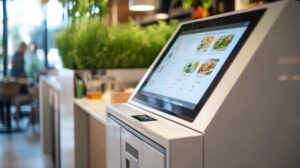
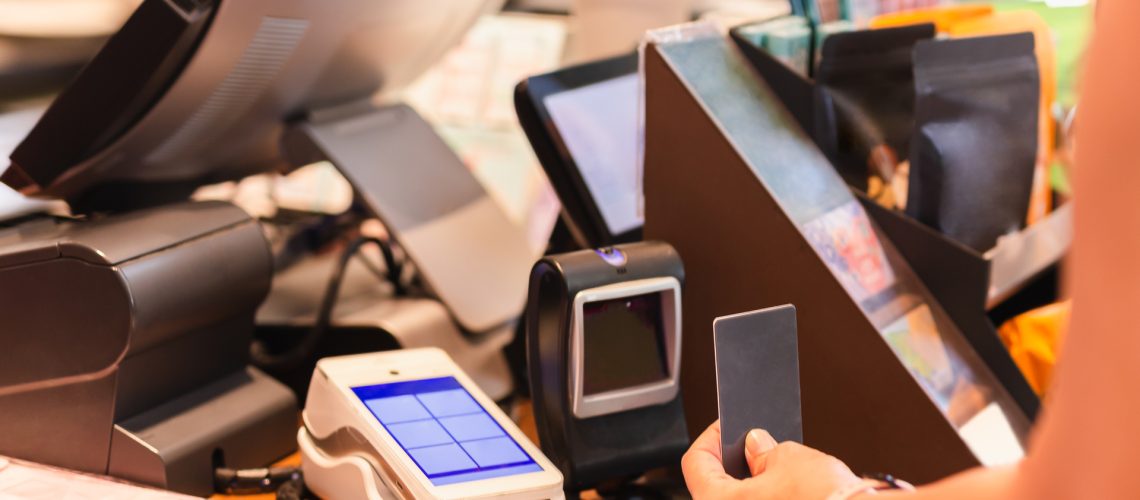
A full POS system is a complete, counter-based setup that handles transactions, inventory management, sales reporting and customer data, with integrations available for accounting software, delivery platforms and loyalty programmes. Hardware typically includes a touchscreen terminal, receipt printer, barcode scanner and cash drawer. F&B configurations commonly add a kitchen display system (KDS) and table management tools.
Best For
Businesses with high transaction volumes, sizeable product or menu catalogues, and operational complexity. Multi-outlet retailers, full-service restaurants managing dine-in and delivery simultaneously, and any operation where staff need access to real-time sales and inventory data across locations will get the most from this format.
Watch Out For
The upfront investment is the highest of the four options. Hardware for a full counter setup in Singapore typically starts from around S$1,500, and monthly software subscriptions range from S$50 to S$300 or more depending on features and outlet count. Onboarding and staff training also require dedicated time. For lower-volume businesses, this level of capability often goes unused.
Card Reader
What It Is
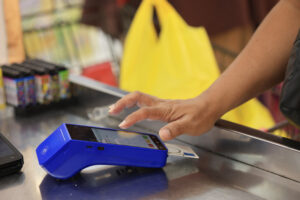
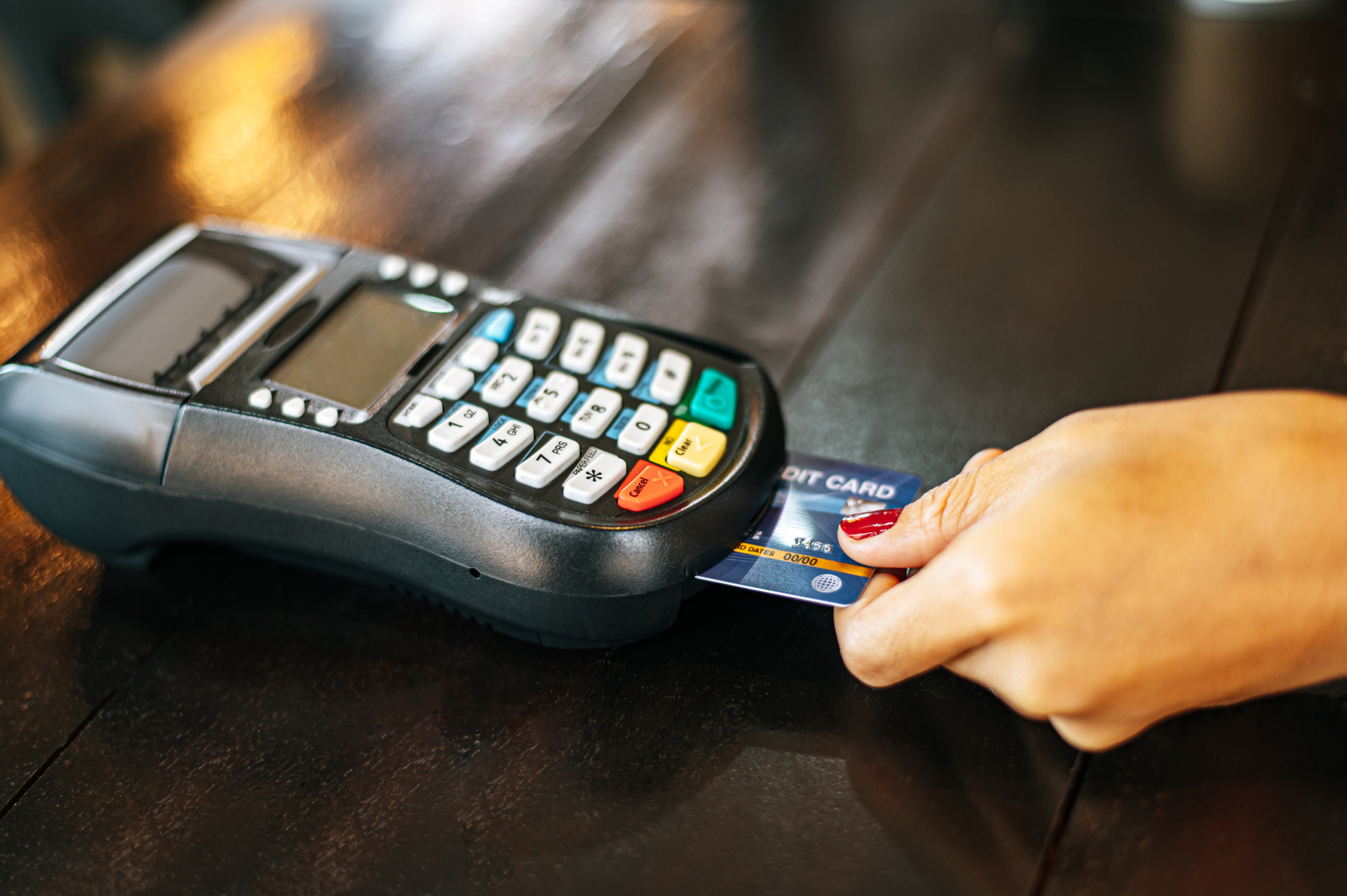
A card reader is a compact device, usually Bluetooth or wired, that connects to a smartphone or tablet to process card and contactless payments. In Singapore, most card readers support tap-to-pay across Mastercard, Visa, Apple Pay and Google Pay. They pair with a basic POS app that handles simple product listings, sales totals and lightweight reporting.
Best For
Independent operators, pop-up retailers, market stall traders and small kiosks with uncomplicated product ranges. The hardware cost is low (generally S$50 to S$350 for the device), setup is fast, and the software commitment is minimal. For businesses that need to start accepting card payments quickly and without overhead, a card reader is the most practical entry point.
Watch Out For
Card readers offer little to no inventory management, limited reporting depth and no integrations with delivery platforms or CRM tools. A business that grows quickly can find itself outpacing the setup within months. They work well as a starting point or as a secondary payment option, but they are rarely a long-term solution for businesses with multi-product operations or expansion plans.
QR Payments
What It Is
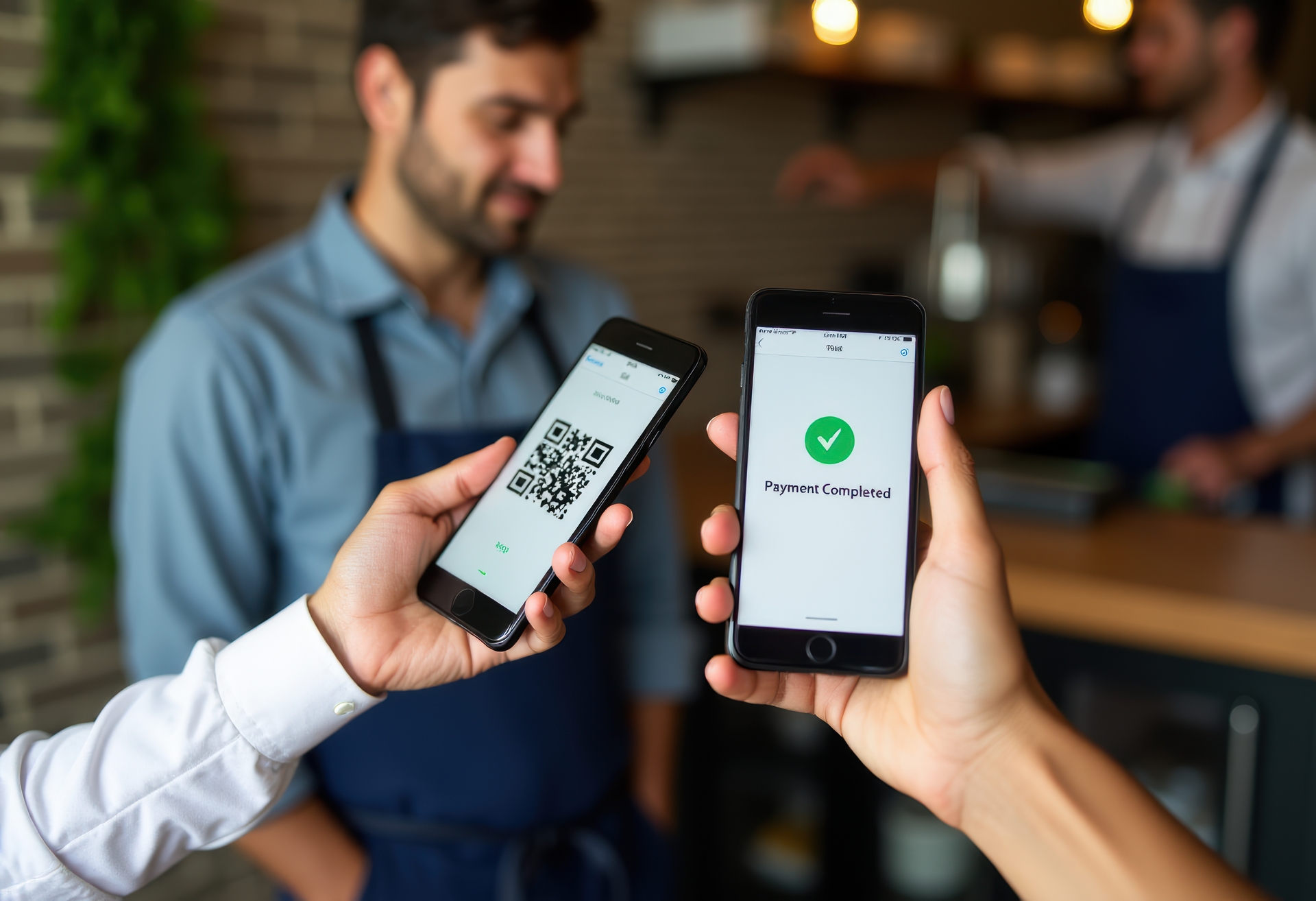
QR payments in Singapore operate primarily through the SGQR (Singapore Quick Response Code) framework, which also happens to be the world’s first unified payment QR code. A single SGQR label consolidates multiple payment schemes, including PayNow, NETS, GrabPay and selected international wallets such as Alipay and WeChat Pay, into one scannable code. Registration is free and no additional hardware is required. The SGQR+ rollout, which began expanding to F&B and retail sectors in late 2024, further improves interoperability by allowing merchants to accept a wider range of payment schemes through a single acquirer.
Best For
Hawker stalls, early-stage businesses, and small F&B or retail operations looking to go cashless with minimal cost and setup friction. Transaction fees via PayNow and bank transfers are among the lowest in Singapore’s payment ecosystem. This makes QR payments a cost-efficient option for operations with modest but steady transaction volumes.
Watch Out For
A static QR code requires the customer to input the payment amount manually, which increases the risk of error and slows checkout compared to a terminal that captures the amount automatically. Dynamic QR systems, where the amount is pre-populated per transaction, are available through integrated POS platforms but move closer to the card reader or full POS model in terms of setup. QR payments also generate no sales data independently, which means reporting relies entirely on bank statements or a separate system.
Mobile POS
What It Is
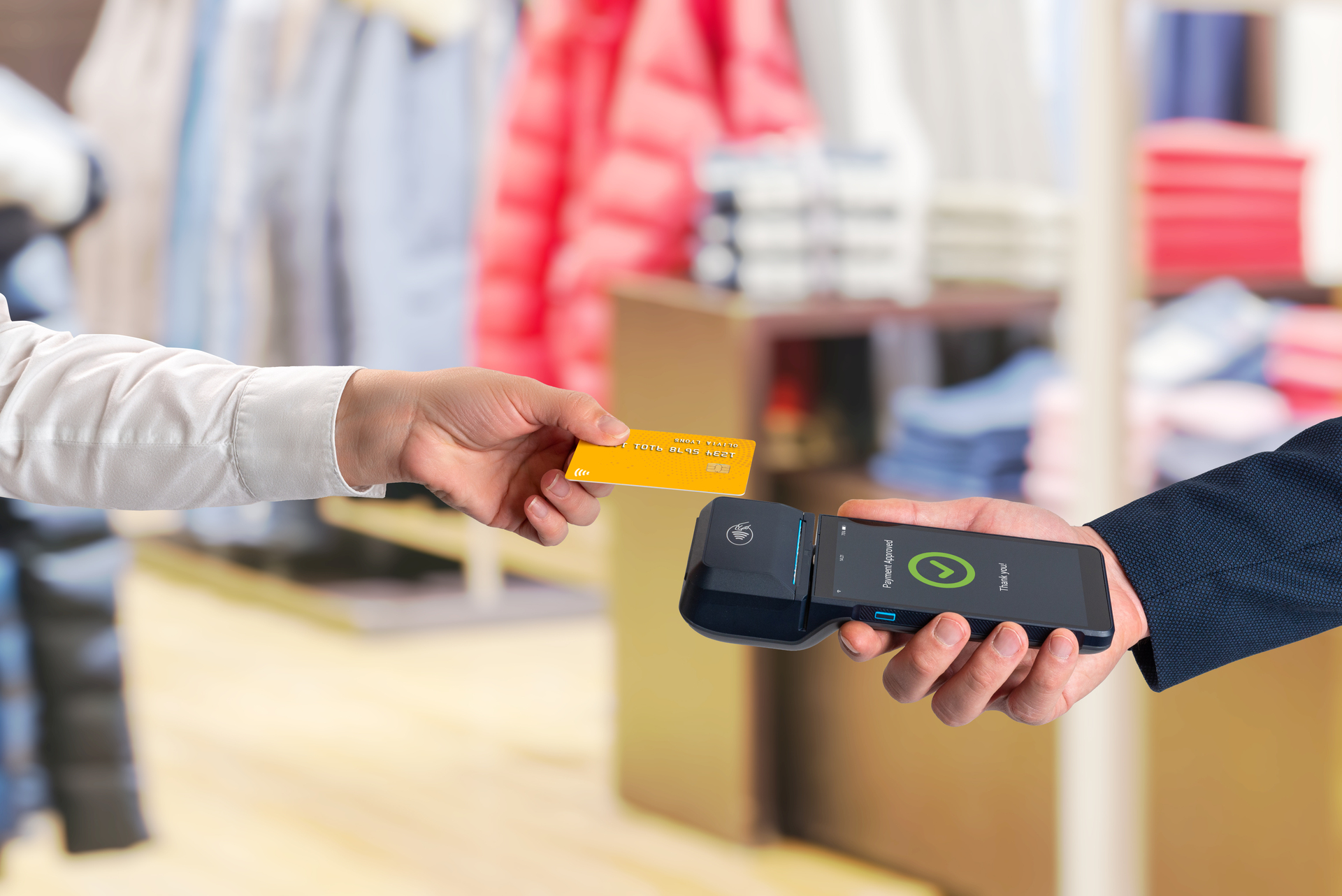
A mobile POS (mPOS) system runs on a tablet or smartphone and is built to bring full POS functionality away from a fixed counter. Unlike a card reader, an mPOS includes software depth: product catalogues, inventory tracking, sales reporting, staff management and customer records. Bluetooth receipt printers and barcode scanners can be added to extend functionality. Hardware setup typically costs between S$500 and S$1,500, with software priced on a per-device or per-outlet basis broadly in line with full POS subscriptions.
Best For
Restaurants that want tableside ordering and payment, retailers with floor-based sales staff and businesses that operate across temporary or rotating locations such as trade shows and pop-up events. For F&B operators specifically, mPOS can reduce table turnaround time by allowing payment to be processed where the customer is seated rather than at a central terminal.
Watch Out For
Mobile POS is not a simplified full POS system. It is a format built for specific operating environments where physical flexibility is a genuine priority. For businesses with a fixed counter and no need to move the point of sale, an mPOS introduces complexity without a corresponding benefit. It is worth being honest about whether mobility is a legitimate operational requirement before committing to this format.
What Format Fits Your Business?
Four questions help narrow the decision:
- How many transactions do you process daily?
- How complex is your product or menu?
- Does your team need to move around during service?
- How much are you expecting to grow in the next one to two years?
High volume, complex inventory and multi-location operations point clearly to a full POS system. Early-stage or single-product businesses will find a card reader or QR setup sufficient. Mobile POS suits operations where the transaction needs to happen away from a fixed counter, and where software depth remains a priority alongside that flexibility. Many Singapore businesses follow a natural progression, starting with QR payments or a card reader and migrating to a fuller system as volume and complexity increase.
Quick Comparison
| POS Format | Best Suited For | Approx. Setup Cost | Key Strength | Key Limitation |
| Full POS System | High-volume retail, multi-outlet F&B, complex inventory | S$1,500 – S$4,000+ hardware; S$50 – S$300+/month software | Comprehensive functionality and integration | Higher cost; requires onboarding time |
| Card Reader | Market stalls, pop-ups, solo operators, simple kiosks | S$50 – S$350 hardware; minimal software cost | Low cost, fast setup | No inventory, reporting or integrations |
| QR Payments (SGQR) | Hawker stalls, small F&B, early-stage businesses | Free to register; no hardware needed | Minimal cost; wide payment app acceptance | Static QR requires manual amount entry; no sales data |
| Mobile POS | Tableside service, events, rotating locations | S$500 – S$1,500 hardware; comparable software to full POS | Software depth with physical flexibility | Unnecessary for fixed-counter operations |
Start Where You Are, Build for Where You Are Going
No POS format is inherently superior. Each exists because real businesses have real operating conditions that make one choice more practical than another. The most useful question to ask is not “which system is the best?” but “which system makes the most sense for the way my business actually runs today, and what will I need when it runs differently?” That distinction tends to separate the businesses that upgrade once from those that do it over and over.
Looking for F&B and retail POS systems built for Singapore businesses? Explore Suntoyo’s range of POS software and hardware to find the right setup for your operation.