Can Self-Ordering Kiosks Encourage Customers To Order More?

Self-ordering kiosks are becoming a game-changer for the F&B industry in Singapore, automating the ordering process and providing customers with a convenient and personalised way to place their meal orders. However, the most important question is, “Can self-service kiosks help boost the revenue for my F&B establishment?”. The answer is a resounding yes! Let us explore how a self-ordering kiosk can benefit your business by enhancing the customer experience and driving sales.


1. Automated upselling

Concept Of Upselling
Pasta and cheese. Burger and fries. Butter and corn. Some dishes complement each other perfectly. Yet, many are often unaware or unsure of what sides to complete their meal. Of course, you can train your staff to recommend additional items to the customers. However, during peak hours, most of your employees will probably be too overwhelmed to have the time to explain each side to the customers.
 
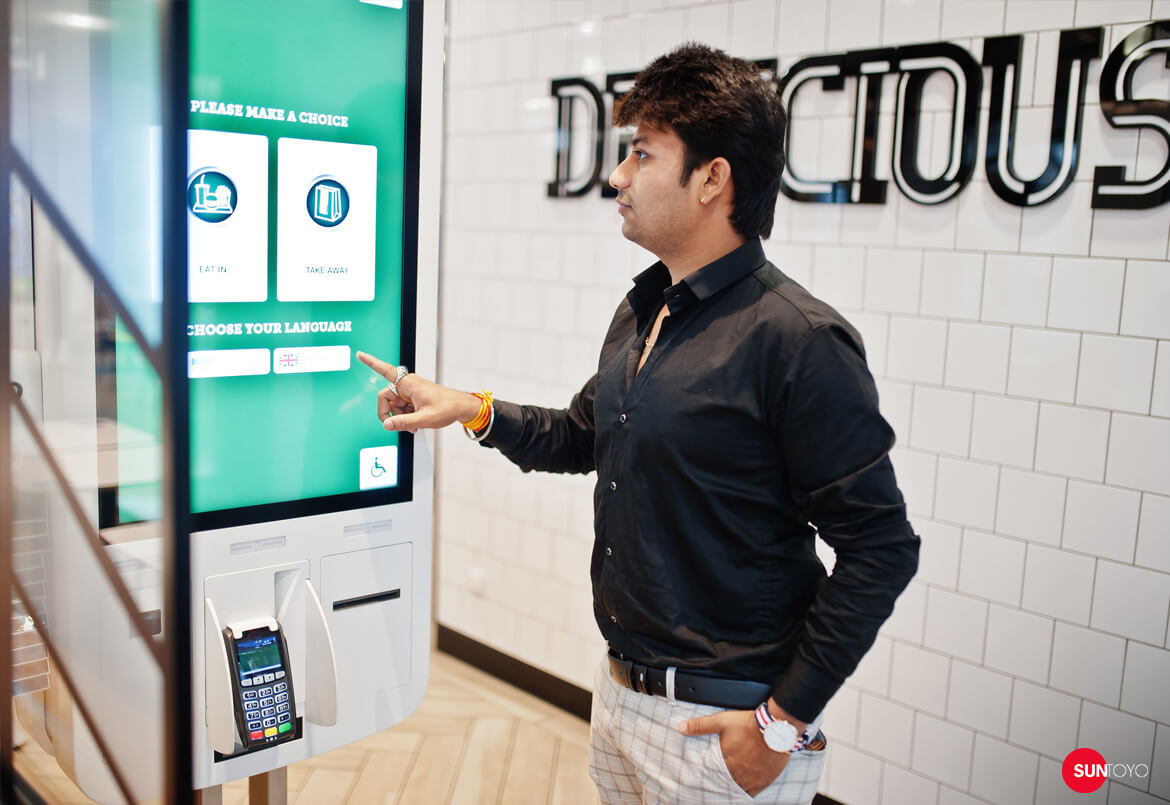
So, how can you help your customers make the best food pairings by themselves? The answer lies in self-ordering kiosks. Imagine ordering your favourite burger and having the kiosk suggest a side of crispy fries or a refreshing beverage to complete your meal. This subtle recommendation often proves irresistible to customers, tempting them to order a few extra items. That is the secret behind increasing your customer’s average order value.
 

2. Data-driven algorithm

How does a self-ordering kiosk understand which items on the menu to recommend to customers? All of this is possible due to the data-driven algorithm within this technology. By analysing past orders, the kiosk can provide data-driven menu suggestions or food combinations that align with a customer’s preference. For example, if dishes with seafood are popular among your customers, the algorithm can recognise this pattern and suggest new seafood dishes or seasonal specials.
 
These personalised recommendations encourage customers to discover new flavours and explore new offerings they may have overlooked otherwise. They also help foster a sense of exclusivity that keeps customers coming back for more. As you can see, this proactive approach not only increases sales. It also enhances the overall customer experience.
 

3. Visual and interactive experience

Person Ordering Food In A Restaurant From A Tablet Screen
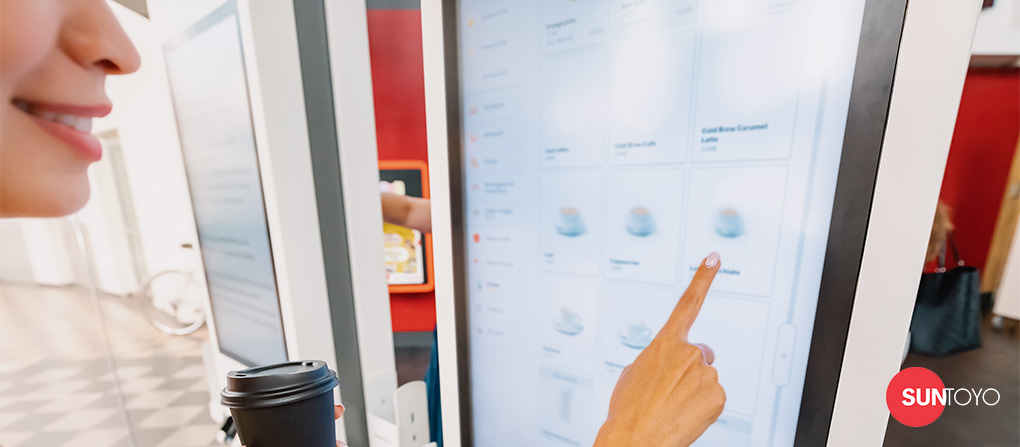
You can only do so much to showcase the numerous dishes offered by your restaurant on a traditional paper menu. The limited space may even prompt you to forego images, making it challenging for first-time customers to visualise what their orders will look like. Conversely, you do not have this worry with a self-ordering kiosk. The e-menu allows you to display vibrant images, detailed descriptions, and enticing visuals to whet the customer’s appetite.
 
Additionally, the user-friendly interface makes it easier for customers to explore the menu thoroughly, make real-time modifications to their orders, and visualise the customisation process. This interactive experience encourages customers to browse at their own pace, reducing the pressure to make quick decisions. That enables them to discover new favourites and add more items to their orders.
 

4. Enhanced comfort and convenience

Customisation is the cornerstone of various modern dining experiences. Self-ordering kiosks excel in this area, providing customers with unparalleled comfort and convenience in tailoring orders. From adjusting ingredient quantities to requesting specific preparation instructions, customers have a high level of control over their food orders, ensuring they receive what they desire and preventing potential miscommunications. As a result, customers have a better experience with your business and are more likely to return in the future.
 
As you can see, self-ordering kiosks are revolutionising how food establishments engage with customers and drive sales. Embracing this cutting-edge technology is no longer just a modern convenience. It is also a strategic move towards success in a competitive F&B market. So, if you have yet to invest in self-ordering kiosks, what are you waiting for? Our friendly staff will be delighted to assist you in selecting the ideal system that integrates with your F&B POS system. Contact us today to learn how we can help you.


4 Signs That Indicate It Is Time To Upgrade Your POS System

As the backbone of your operations, the efficiency of your point of sale (POS) system can affect your bottom line significantly. Therefore, your equipment must be capable of accelerating innovation, navigating your business forward, and adapting to various market changes. With a modern POS system, you can stay ahead of the curve in a rapidly evolving business world. Let us share the tell-tale signs that indicate it is time to upgrade your current POS system.

Sign #1: Your current POS hardware is outdated

Using outdated POS hardware not only poses significant risks for your daily operations. It also threatens future sales growth and opportunities. A setup consisting of clunky, slow, or obsolete terminals and peripherals can hinder the efficiency of operations, leading to longer transaction times, frustrated customers, and increased risk of technical failures.

The timely replacement of your ageing POS system will allow you to eliminate these risks and capitalise on industry trends to improve your business’s productivity, efficiency, and profitability. The upgrades to new peripherals and tools can also make your brand more modern and relevant, allowing you to leave a positive impression on customers.

Learn More: Why It Is Time For Your Business To Upgrade To A POS System

Sign #2: Your POS system does not have real-time reporting tools

Your POS system does not have real-time reporting tools

Real-time information is invaluable in our modern data-driven business landscape. No longer are acting on hunches and guesses going to cut it. So if your current POS system lacks robust reporting capabilities and cannot offer comprehensive insights into your business, you are missing out on a competitive advantage.

However, data alone is insufficient. You will also require the necessary tool to digest all this information, allowing you to glean insights and take action to boost sales. A modern POS system with detailed reporting features can help you track sales, inventory levels, and customer behaviour in real-time, enabling you to make informed decisions on the fly and stay agile and responsive in a fast-paced market.

Sign #3: It has been a while since you purchased your current POS system

The pace of technological advancement is relentless, and what was cutting-edge a few years ago may be outdated now. Even if you encounter no significant issues with your current POS system, using older equipment may leave you vulnerable to new cybersecurity threats. Additionally, your system may no longer be compatible with the latest payment technology. As a result, your customers have fewer payment options.

Besides, industry guidelines generally recommend upgrading a POS system every five years. Doing so will help futureproof your business and ensure you continue to offer the convenience and security that modern consumers expect.

Sign #4: You notice your POS system is slowing down or crashing frequently

You notice your POS system is slowing down or crashing frequently

Is your POS software constantly lagging or freezing up? Perhaps you have even experienced multiple system crashes. These issues are the most glaring signs yet that an upgrade is overdue. Technical glitches and delays can frustrate employees and customers, leading to lower productivity and potential revenue loss. Remember, when your POS system is down, it impacts your business too!

Upgrading to the latest POS hardware and software is the best way to improve system performance and minimise the likelihood of crashes. Modern POS systems are engineered to cope with the demands of a busy work environment, thus eliminating the headaches caused by system slowdowns and allowing you to enjoy reliable performance during peak business hours.

Your POS system is a critical component of your business’s success. So avoid waiting until it becomes a liability; make the decision to upgrade your POS hardware and software now to enjoy the benefits of a modern POS system and position your business for continued growth and success. Contact Suntoyo Technology today if you are in the market for a brand-new POS system.

Inventory Management Software: Why Your POS System Requires This Application

In today’s fast-paced business environment, effective inventory management is essential for the success of any retail or hospitality establishment in Singapore. Gone are the days when you can rely on tracking your inventory with a pen and paper. Such actions only increase the risk of human errors, leading to stockouts or overstocking. 

Instead, inventory management software has become an indispensable tool for businesses, especially those using a POS system, as it helps automate inventory processes. So if you are considering a POS system for your enterprise, let us share why you should consider one with inventory management software installed.

What is inventory management software?

Every business owner understands the importance of staying on top of their merchandise. Too little inventory when and where needed, and you can expect unhappy customers. Conversely, abundant supplies come with their own liabilities, such as the risk of spoilage, theft, and damage. Therefore, finding the happy medium between the two is crucial. However, how can you simplify this process for you and your staff? 

Enter inventory management software. This powerful tool allows you to monitor, control, and optimise inventory levels efficiently. It can provide you with essential insights into your business performance with the data collected by your POS system, allowing you to make more informed decisions based on valid and accurate information. As a result, you can better understand when to restock and how much supplies to order.

Learn More: Manage Your Inventory Effectively With A POS System

How does the software work?

How does the software work-POS systems

There are two primary types of inventory management systems – periodic and perpetual. The former is more labour-intensive, as it relies on physical inventory counts. Subsequently, an employee will adjust the quantities in the system accordingly. While more cost-effective, this simple technology is less reliable, with a higher risk for discrepancies and human error. 

Fortunately, modern POS systems utilise the latter system, which tracks inventory levels in real time through technology like barcode scanners and RFID tags. With automated inventory tracking, you can receive the most accurate data at any given moment since every sale, purchase, or transfer is immediately recorded, and inventory levels are updated accordingly. As a result, you benefit from enhanced accuracy and efficient control over your inventory.

Benefits of inventory management software for businesses

As a busy entrepreneur, the last thing you want is inventory management challenges like overstocking, stockouts, and inaccurate supply orders to distract you from more pressing matters like expanding your business. Thankfully, managing your inventory need not be a struggle anymore. Read on to learn the benefits you can enjoy with effective inventory management software.

Benefit #1: Streamline inventory processes

Streamline inventory processes-POS software

Enjoy real-time visibility into your stock levels and streamline inventory processes with the right POS software. With instant updates after each sale or restock, you can monitor inventory movement accurately and make informed decisions regarding stock reordering, ensuring your shelves are always well-stocked and minimising the risk of stockouts or overstocking.

Benefit #2: Save costs

Save costs-POS system

The benefits of optimal inventory levels cannot be overstated. A POS system with inventory management software can enable you to identify slow-moving items and forecast demand more accurately. By efficiently managing inventory, you reduce carrying costs associated with excess stock and avoid any loss associated with stockouts. The system can also automate reordering based on a preset reorder point or minimum stock level, allowing you to streamline the procurement procedures, thus saving time and effort while ensuring a steady supply of products.

Benefit #3: Improve customer service

Improve customer service-POS system

Imagine searching for a particular product only to discover it is out of stock. That is undoubtedly a frustrating experience for any customer. With inventory management software integrated into your POS system, you can gauge how much stock you need to match expected demand, ensuring you always have sufficient products to fulfil customer orders. Order processing time and errors are also reduced, keeping customers happy. That can lead to increased sales and repeat business.

As you can see, inventory management software is essential for any business using a POS system. So if you have yet to have a dedicated inventory management system for your enterprise, what are you waiting for? It is time to unleash the full potential of your POS system and take your business to new heights of efficiency and profitability.

If you seek a reliable retail POS system, look no further than Suntoyo Technology! As one of the leading POS service providers in Singapore, we offer various solutions that cater to every aspect of your technological and operational demands. Contact us today to learn more about our products.

Why It Is Time For Your Business To Upgrade To A POS System

Home > Blog > Why It Is Time For Your Business To Upgrade To A POS System

Has your cash register seen better days? Does it lack the features you require to streamline business processes? If you answer yes to either question, it is definitely time to upgrade to a point-of-sale (POS) system. However, we understand some businesses may be on the fence about this decision. So let us share why this switch might be an excellent investment in the long run.

What is a point-of-sale system?

If you are unsure what a POS system is, let us clarify what this system entails. Think of it as a modern advancement of the cash register. You can still process sales with the machine, but there is also so much more it can offer your enterprise. A POS system can do it all, from in-depth reporting to inventory management, offering businesses a range of tools to manage the ins and outs of their stores.

Why your electronic cash register might be insufficient

cashier using an electronic cash register-POS system Singapore

Sure, you will be using your POS system to ring in sales and hold onto cash since it is a tool for managing your entire business. When you put it that way, a POS system may not seem a significant step up from your cash register. But dig deeper, and you will find that a conventional cash register has restricted capabilities. You are limited to handling sales transactions, calculations, and generating receipts. 

A POS system offers the same features with additional innovations and a seamless and improved user experience that your staff can easily pick up. As a retailer, you may benefit from a one-stop tool that allows you to manage your stock, schedule employee work hours, check historical data to make sales projections, and improve your customer service. Essentially, a POS system streamlines every aspect of operating a single or multi-store business.

Why a POS system is a worthwhile investment

cash-Cash registers Singapore

After switching to a POS system, you may discover noticeable returns on your investment quickly. The most obvious difference is your business efficiency. A POS system can automate repetitive, time-consuming tasks while reducing human error, allowing you to process payments, refund orders, and restock your inventory in a single system without any extensive human intervention required. As such, you can focus on more essential areas of your business.

Additionally, generating and compiling reports on sales data, inventory levels, and customer behaviour is no longer a hassle, as these tasks can be handled by your POS system. With detailed error-free reports to peruse, you can make more informed decisions to grow your business, such as what products to restock and the ideal pricing strategy to entice consumers to patronise your store.

Learn More: 4 Benefits Of Investing In A Quality POS System

Upgrading to a POS system

Given the numerous advantages of a POS system, why are we not chucking cash registers aside once and for all? The biggest reason (and limitation) is the cost of integrating a POS system into your business.

Depending on the size of your business and the complexity of your operations, a POS system can cost several thousand dollars, which is a sizeable sum for many small and medium enterprises in Singapore. Moreover, entrepreneurs have to spend additional time and money to maintain the system and train staff on how to use the machine. 

Fortunately, small and medium enterprises looking to upgrade to a POS system can seek financial assistance through the Productivity Solutions Grant (PSG). With the PSG grant, businesses can receive up to 70% subsidy to kick-start their adaption of technology with pre-qualified IT solutions and equipment to improve their competitiveness and productivity.

As you can see, there are various benefits to upgrading your cash register to a POS system. So avoid lagging behind your competitors and getting left behind with the changing times by adapting and staying ahead of the game. A modern POS system will provide you with the tools to boost your business efficiency and streamline operations.

Are you ready to upgrade your cash register? In that case, look no further than Suntoyo Technology for your modern POS needs. Our team will be glad to assist you in selecting the best system that fits your business requirements. Contact us today to learn more about our products.

Manage Your Inventory Effectively With A POS System

Home > Blog > Manage Your Inventory Effectively With A POS System

Every entrepreneur understands the importance of inventory control. After all, if you are running out of stock, you are missing out on potential revenue. And as the centre of your business operation, your point-of-sale (POS) system is capable of helping you manage your store’s inventory efficiently. Let us share how your POS system can help you achieve this goal.

1. Ensure effective stock management

Ensure effective stock management-POS system Singapore

To run a highly successful business, you must first know what items are your top-selling products. With this knowledge, you can push these products more effectively by giving them adequate floor space and ensuring they always remain available. And your POS system can help you determine your best sellers. 

With data obtained from your POS system, which is based directly on your sales history, you can see which products are performing well with your customers. As such, you can make an informed decision on which items should continue getting premium floor space and which products should go on clearance to make room for better-selling goods.

2. Never worry about running out of stock

Never worry about running out of stock-POS system

When things get hectic, it is easy for you to overlook some tasks, such as monitoring your stock levels. Fortunately, your POS system can function as your assistant by keeping track of stock levels for your countable items. Functions like stock count, stock in and out, and stock variance can help you track your stock levels efficiently. 

Subsequently, you can set low stock alerts to remind you to replenish your inventory based on your preset low inventory levels and optimal stock, ensuring you never miss out on potential revenue. And in the event you plan on transferring stock from one outlet to another to mitigate low stock levels in a particular store, your POS system can update the stock count for both shops. Hence, accurately maintaining inventory levels for all storefronts.

This feature is also helpful for any warehouse-to-outlet stock transaction, allowing you to track inventory levels for your various retail outlets and warehouse. With these handy tools, you ensure you always have an adequate amount of stock to meet consumer demand.

3. Manage inventory shrinkage

Manage inventory shrinkage-POS system singapore

Managing inventory shrinkage (inventory loss due to damage, poor tracking, or theft) can be challenging, as a lack of visibility into your inventory can make it tough to spot shrinkage. Your POS system can mitigate this issue by allowing you to track inventory in real-time. Each item is immediately deducted from the stock count once you make a sale.

This method saves you the hassle of having to manually count what is in stock every week, which is time-intensive and error-prone. Any miscount or typo can cause inaccurate stock counts, adding more problems to your plate. With up-to-date inventory, you have accurate data available to determine if there are any discrepancies when it comes time to conduct your monthly, quarterly, or yearly inventory counts. 

The inventory feature of the POS software is also helpful in managing damaged items, making it simple to track blemished products and document why they were taken off the shelf. And when your employees know that every inventory is counted and tracked, they are less likely to steal, instilling employee accountability.

As you can see, a POS system is crucial to any retail business looking to streamline its inventory management process. So if you have yet to make the switch, we recommend doing so immediately. And if you are looking for a reliable POS system, you have come to the right place! Contact us today, and our team will be glad to assist you in choosing a POS system that matches your business needs.

Learn More: 4 Benefits Of Investing In A Quality POS System

How To Reduce the Risks Of Employee Theft At Your Restaurant

Home > Blog > How To Reduce the Risks Of Employee Theft At Your Restaurant

Your employees are the lifeblood of your restaurant. Without their effort and commitment, it would be near impossible to ensure the continued success of your business. So as the owner of a restaurant, and the leader of your employees, you would want to establish trust with your staff and give them autonomy to produce their best work for your business.

Unfortunately, what you may overlook through this rose-tinted lens is a very credible threat to your restaurant – employee theft. In fact, employee theft is more common than you think, accounting for 75% of all inventory shortages and 4% of sales. To make matters worse, about 75% of staff steal from their workplace on at least one occasion. 

As you can see, repeated internal theft can be harmful to your business. So how do you balance having adequate security protocols while providing your employees with the trust required to run a successful restaurant in Singapore? If you are scratching your head for an answer, fret not. Read on to learn how to reduce the risks of employee theft at your restaurant. 

Tip #1: Get an F&B POS system

Get an F and B POS system-F and B POS system Singapore

How you manage your cash transactions in your restaurant can limit your vulnerability to employee theft. The more intuitive your cash management system is, the more obvious it will be when the register is short. For example, an F&B POS system with the appropriate software can project the expected cash at the end of each business day based on the transactions keyed into the system. As such, it will be immediately apparent to management whenever there is a discrepancy with the recorded cash. 

The benefit extends beyond security, as an F&B POS system also simplifies cash management tasks for your staff, enhancing efficiency. It can also prevent order discrepancy and improper billing, which can result in dissatisfied customers. When an employee takes a customer’s order through a handheld ordering device, you can rest assured that the data is sent accurately to the cashier and kitchen staff.

Learn More: A Beginner’s Guide To Restaurant Management Systems

Tip #2: Adjust staff settings and access controls

You should always be aware of which employees have passcodes or keys. After all, the safekeeping of these access control measures is an essential responsibility. However, it is recommended to minimise the number of employees with access to the passcodes and keys to reduce the risk of after-hours crime. And if there is an incident, you can narrow down the pool of suspects to those with access.

You should also consider limiting what your employees can and cannot do when inputting orders and taking payments. For example, a sneaky employee may receive payment for a bill of $100 before voiding the check and taking the cash for themselves. Since the voided check will not show up on the total amount, the POS report total for the day will tally with the amount in the electronic cash register.

An F&B POS system with customisable controls can help avoid such situations. With the option to set up each staff member with specific permissions based on their role, you can enjoy greater oversight. The example shared above can be easily prevented because manager permission would be required to void the check.

Tip #3: Implement an effective surveillance system

Implement an effective surveillance system-F and B POS system Singapore

Implementing a surveillance system in your restaurant serves as an effective deterrence against brazen criminals. The ideal spot to install the security camera is at the location where your electronic cash register is situated. You may understandably have concerns about how your employees will react, but you can reassure them that the cameras can protect them from wrongful accusations. 

If theft were to occur in the workplace, you can immediately get to the bottom of the issue by reviewing the security footage. Remember, reviewing a questionable situation does not have to be done with any level of suspicion. So no accusations should be made until sufficient evidence is collected. This way, you still retain the trust of your employees while maintaining the necessary level of security in your restaurant.

Tip #4: Train employees with security in mind

Alas, it is impossible for you to be everywhere at once. In these moments, your employees are your eyes and ears on the ground. So it is essential to empower them to come forward when they notice any suspicious behaviour. Let them know what you expect from them and whom they can approach if they spot anything suspicious. 

Your handling of such situations is also crucial. If your punishment or approach is viewed poorly by other employees, this may discourage anyone from coming forward in the future. Therefore, you must be fair and transparent about how you would like your employees to handle theft reporting.

Now that you have an answer to the question, “How to prevent employee theft”, what is your next step going to be? Remember, by taking proactive steps to minimise internal theft, you are investing in the longevity of your business. And if you do not have one already, an F&B POS system can provide you with greater control and insight into your staff’s actions, serving as a vital tool in employee theft prevention.

If you need help choosing the most suitable F&B POS system for your restaurant, do not hesitate to contact Suntoyo Technology. Our team will be glad to assist you with selecting your ideal system.

How To Grow Your Retail Business

Home > Blog > How To Grow Your Retail Business

It is no secret that the retail industry has undergone massive changes in recent years. With the rise of e-commerce, many Singaporeans now prefer to shop from the comfort of their homes. So does this herald the death of retail that some analysts have predicted for years? Not so, if recent statistics are anything to go by.

Nonetheless, the hyper-competitive market does indicate that retailers must make more of a concerted effort to continue growing and find new ways to appeal to consumers to survive and thrive. As a retail owner yourself, how can you achieve this goal? Read on to learn more.

1. Re-evaluate your business plan

Re-evaluate your business plan-POS system Singapore

A solid business plan lays the foundation for your brand to get off to a good start, and it will only become even more crucial further down the road when you plan to expand and scale your business. So if your business is not heading in the right direction, it might be time to re-evaluate your plan. 

Revisit your brand purpose and vision established at the beginning. Are you closer to your vision? Have you stuck with your purpose? If the answer is no, then it is time to re-strategise and reconsider your approach to allow you to move closer to your goals. 

We also recommend referring to your financial plan regularly to ensure it measures up to your day-to-day expense. Do not hesitate to make adjustments when necessary. Updating your plan along the way allows you to have a better understanding of your financial situation. As such, you can prepare contingency efforts and secure more funding accordingly – if things should come to that.

Remember, when you fail to plan, you plan to fail. Accounting for any and all potential failures allows you to consider every scenario. Hence, you can better identify the correct path to success. In the worst-case scenario, you still ensure your business will survive should your expansion plans fail.

2. Target the right audience

Target the right audience-POS system Singapore

This strategy is a no-brainer, and it is even more vital in the face of shifting consumer habits. Ask yourself this question, “What problems are my business uniquely placed to solve? The answer to this will help you align your business purpose, brand, and target market and allow you to offer the most attractive products to the right customers. 

Do not neglect to brush up on your customer service too. Customer experience is a vital part of the retail experience, and it is something most customers take into account before purchasing or recommending a store. It is also an opportunity for you to distinguish yourself from your competitors.

You may find that a reliable retail POS system can help significantly with this goal. It can speed up checkout times, ensuring customers spend less time waiting in line – something every shopper dreads.

A POS system with built-in customer relationship management (CRM) features can also help you identify your loyal customers and make implementing a loyalty programme a breeze. This way, you can show gratitude towards your customers and reward them with special discounts, enticing them to continue patronising your business.

Learn More: How To Boost Customer Experience With Your POS System

3. Embrace technology

Embrace technology-POS system Singapore

Some entrepreneurs in Singapore are hesitant about new technology due to the initial investment costs. However, we will posit that not taking advantage of technology is even more costly. For example, a robust POS system can do wonders for a retail brand and is more than just a check-out point for transactions. 

In fact, a reliable retail POS system can help you manage your inventory smoothly. After each transaction, your POS system will automatically update your inventory database. This gives you a real-time record of your inventory levels, allowing you to know when stocks are running low. As a result, you can schedule the optimal time to restock to ensure there is always sufficient supply to meet consumer demands. 

The transactions recorded in your POS system can also provide insights into how your business is faring. You can compile the data into a sales report, allowing you to glimpse which products are more popular among your customers. This gives you a better idea of the type of products your customers seek, letting you tailor your stock accordingly.

We hope what we have shared has provided you with a better insight into how you can expand your retail business. If you are excited to begin growing your brand, do not hesitate to contact Suntoyo Technology! Our team will be happy to assist you with selecting the ideal retail POS system suited to your expansion.

A Beginner’s Guide To Restaurant Management Systems

Home > Blog > A Beginner’s Guide To Restaurant Management Systems

Are you the owner of an F&B establishment in Singapore? In that case, a restaurant management system (RMS) should be high on your priority list. In fact, almost every modern food establishment utilises this piece of technology to manage their business.

However, if the first thought that pops into your head is, “What is a restaurant management system?”, fret not. Let us clarify what this system entails and outline the benefits of adopting it for your establishment.

What is a restaurant management system?

A restaurant management system is a form of POS system catering to bars, cafes, restaurants, and other establishments in the F&B industry. A typical RMS setup generally includes both hardware and software, including a barcode scanner, cash register, receipt printer, and more. 

These features are conveniently packaged into one comprehensive tool to improve the efficiency of your restaurant. Moreover, it is designed to integrate seamlessly with other software applications, allowing you to customise an F&B POS system that suits your business needs.

So what separates a restaurant management system from other POS systems? Unlike other conventional POS systems, RMS encompasses all your back-end needs, such as keeping track of your employee schedules and inventory. It also offers features unique to the F&B industry, like the ability to send orders directly from the customers’ table to the kitchen, ingredient-level inventory updates, and a kitchen display system.

Why should you use a restaurant management system?

Naturally, the features present in each restaurant management system are different depending on the software it utilises. However, the core benefits provided by an RMS are generally identical. Let us share the perks you can enjoy when you adopt a restaurant POS system for your business.

Benefit #1: Prevent wrong orders

Restaurant Pos System Prevent Wrong Orders

You would rightfully be displeased if a waiter mixed up your order and served an incorrect dish to your table. Unfortunately, this is an all too common issue that many restaurants face. Such errors often lead to improper billing and dissatisfied customers, which are usually precursors to a bad review. 

Fortunately, such problems can be easily resolved with a reliable F&B POS system. When an employee takes a customer’s orders through a handheld ordering device, you can rest assured that the data is sent accurately to the cashier and the kitchen staff, preventing any billing or order discrepancy from occurring.

Benefit #2: Efficient staff management

Restaurant Pos System Efficient staff management

Do you have too many employees on duty at specific times and then find yourself short-staffed on other occasions? That undoubtedly seems like poor resource management. A restaurant management system can analyse the peak periods in your business and suggest the appropriate number of staff you require for a particular shift. This allows you to better plan your employees’ schedules. As a result, you will never find yourself short-staffed again during busy periods.  

Benefit #3: Improve your customer relationship management

Restaurant Pos System Improve your customer relationship management

Many restaurants in Singapore now offer loyalty incentive programmes to entice customers to patronise their business regularly. So why do these businesses go the extra mile to implement such initiatives? Because they work! In a study conducted by Bond, around 71% of consumers believe that their loyalty programme was a meaningful part of their relationship with the brand. 

Naturally, you do not want to be left behind by your competitors. An F&B POS system with CRM features can help you record essential customer information, such as their name, contact, and transaction history. This data allows you to push customised deals and promotions to specific customers based on their past purchases and interests. It also allows you to provide better after-sale service, leaving a positive, lasting impression on your customers.

Learn More: How To Boost Customer Experience With Your POS System

As you can see, there are plenty of reasons why every F&B business should adopt a restaurant management system. However, some entrepreneurs shy away from adopting a restaurant POS system due to its high implementation cost. 

If you share a similar sentiment, here is some good news that may persuade you to change your mind. The current PSG grant offered by the government subsidises up to 70% of the cost of a modern POS system, making it more affordable for F&B owners to integrate this technology into their existing business models. 

Moreover, you will find that the benefits of a restaurant management system far outweigh its cost. So what are you waiting for? If you need help choosing the most suitable system, do not hesitate to contact Suntoyo Technology. Our team will be glad to assist you with selecting your ideal F&B POS system.

What Features To Look Out For When Purchasing a Self-Ordering Kiosk

Home > Blog > What Features To Look Out For When Purchasing a Self-Ordering Kiosk

By now, you are probably familiar with a self-ordering kiosk. After all, this machine is one of the first things you see when you step into any fast-food chain. So what has prompted the adoption of this restaurant automation technology? It is all about providing customers with the best possible service.

A self-ordering kiosk allows customers to easily and independently place their orders without waiting in long queues, which speeds up the ordering process. This benefits both the food establishment and the customer. The customer spends less time getting their food, resulting in a more positive experience. Meanwhile, the restaurant eliminates long queues from forming, putting off potential customers from entering the establishment.

It sounds like a win-win scenario, right? No wonder these machines are becoming more popular in Singapore. As an owner of an F&B business, if you are looking to get in on the action, we say go for it! But don’t be hasty. Let us help you make an informed purchase by sharing the crucial features you should have in your self-ordering kiosks.

Learn More: Why Self-Ordering Kiosks Are The Future For Restaurants

Feature #1: Seamless touchscreen display

Seamless touchscreen display self-ordering kiosks Singapore

Thanks to the prevalence of smartphones and tablets, many customers have no problem navigating a self-ordering kiosk. However, an unintuitive touchscreen display can lead to a frustrating experience for any customer. Imagine clicking on a particular item or wanting to navigate to another page only for the machine to remain unresponsive to your touch.

After a couple of failed attempts, a customer will likely leave in frustration, costing you potential sales, or worse, a bad review. Therefore, it is imperative that your self-ordering kiosks offer customers a seamless navigating experience, allowing them to order with ease. We recommend getting a machine with a capacitive touchscreen feature. This display screen is similar to our smartphones and offers seamless and accurate navigation capabilities. 

Feature #2: Intuitive kiosk interface

When your customers are placing their orders, they want to see everything on offer. Therefore, the photos and contents of each food item should be clearly displayed. Your customers must also be able to navigate your e-menu easily. A larger screen helps in this regard and allows you to display clear instructions on how to use the machine, thereby improving customer experience.

An intuitive kiosk interface also helps with upselling, as you can easily display cross-selling prompts and menu modifiers front and centre to boost average check size. However, your kiosks’ customer dashboard should encompass more than an easy-to-view e-menu. The main goal is to shorten the customer’s journey from ordering to payment.

Feature #3: Have various payment options available

Have various payment options available self-ordering kiosks Singapore

Customers are increasingly looking for convenience nowadays. This includes having the choice of selecting their desired payment options. So your self-ordering kiosks must be equipped with card readers to handle magstripe, EMV, and NFC (Near Field Communication) cards. Bonus points if the system supports mobile payment applications like PayNow and PayLar!.

However, you should keep in mind that some customers, particularly the elderly, may prefer cash payments. So it is a good idea to ensure your self-ordering kiosks have a cash input option. You can also have a cashier on standby to accommodate any customer who wants to pay with cash.

Feature #4: Integrate with your existing POS system seamlessly

Your POS system is the centralised hub of your entire restaurant operations, linking front-end operations to back-end operations (food preparation). As such, you would want to ensure your self-ordering kiosks can be easily integrated with your current POS system to ensure your restaurant continues operating without a hitch.  

Seamless integration of these two solutions enables your restaurant to run more efficiently while lowering manpower costs. Your customers also get to enjoy smooth and fast service, leaving a positive, lasting impression on them. Good service can often be the difference between a one-off and a repeat customer.

Now that you have a clear idea of what to look for in your self-ordering kiosks, it is time to begin your search in earnest. However, if you still have several lingering questions, our team will be glad to assist you in identifying your ideal kiosk. Do not hesitate to contact us today to learn how we can help you!

Why Self-Ordering Kiosks Are The Future For Restaurants

Home > Blog > Why Self-Ordering Kiosks Are The Future For Restaurants

Restaurant automation and technology are rapidly changing the way the F&B industry operates and functions in Singapore. One of the most obvious examples of such changes is the way we order our food. Previously, you may expect to receive a physical menu and place your order with a waiter. Now, it would not be a shock for customers to perform these actions digitally via a QR ordering system.

Even fast food and fast casual chains in Singapore are revolutionising how we order our meals. Step into McDonald’s, KFC, or Burger King, and one of the first sights you see will be the establishment’s self-ordering kiosks. So why these changes? Providing customers with convenient and high-quality services is the most obvious answer.

However, there are plenty more reasons beyond this. In fact, we will posit that these automated ordering systems are the future of the F&B industry. Let us share why self-service kiosks are becoming more popular in Singapore and why you should consider adopting this technology if you have not already done so for your F&B business.

What are self-ordering kiosks?

Man holding a pen thinking

As their name implies, self-ordering kiosks grant consumers the autonomy of ordering and paying for their meals themselves. Think of these machines as sophisticated vending machines for meals. They generally consist of a touchscreen with a user-friendly digital interface. The screen will display the menu and prices and guide users through the ordering process – from ordering their preferred dish to payment.

Why are self-ordering kiosks rising in popularity?

Growth shown in graph

A study conducted by Tillster revealed that 65% of consumers would visit a restaurant more often if the establishment has self-ordering kiosks while 30% prefer to order from a self-ordering kiosk to a cashier if the lines are of equal length. So here is the million-dollar question: why are self-ordering kiosks rising in popularity?

While it is challenging to pinpoint a specific cause, the bump in popularity is generally attributed to a change in consumer behaviour. Thanks to technology providing us with greater convenience, we have gotten used to the ease of online ordering. Therefore, we expect similar control, choice, and personalisation when we visit a restaurant in person. And self-ordering kiosks are designed to meet these changing expectations.

There is also no denying that the pandemic has encouraged more entrepreneurs in the F&B industry to embrace this technology. Self-ordering kiosks help promote social distancing, allowing customers to order and pay for their meals without interacting with the cashier. Restaurants simply have to sanitise the machines frequently to maintain strict hygiene standards.

Why should you consider self-ordering kiosks?

It is obvious that self-ordering kiosks are becoming more popular. So if you have not already adopted this technology, what are you waiting for? If you are still on the fence about this decision, let us share several benefits of self-service kiosks to change your mind.

Benefit #1: Decreased waiting time

People waiting in line

Nobody likes waiting in a lengthy queue line. If someone spots a long queue forming in your food establishment, they may choose to patronise another restaurant instead. A self-service kiosk can help speed up the ordering process, minimising any delay in service time.

Of course, you can still open a counter or two for customers who prefer ordering in person. But you will only require a few staff members to operate the registers. You can reallocate the rest to areas more beneficial to the business. For example, you can place more employees in the kitchen so that more dishes can be prepared and served, thereby reducing service time.

Benefit #2: Ensure order accuracy

Man and woman being served some food

Imagine waiting a long time for your meal to arrive only to discover that the kitchen has mixed up your order. You would understandably be displeased. Perhaps livid enough to leave a bad review. Naturally, as a business owner, you will want to avoid this happening to any of your customers.

Unfortunately, it is impossible to eliminate human errors. But you can circumvent this issue by automating your ordering process. Self-ordering kiosks with a visual menu can significantly reduce such occurrences in your restaurant because your customers know exactly what they are ordering.

Benefit #3: Targeted upselling

Man drawing graphs

Relying on your employees to highlight the latest promotions or popular items on the menu can be a hassle. Firstly, your staff must be prepped on the newest offers. Secondly, miscommunications may occur during the upselling.

Self-ordering kiosks provide a straightforward way to push targeted upsell prompts while your patrons are building their orders. For example, your kiosk can display prompts with various menu modifiers or promotions that customers may not be aware of otherwise. This includes meal combos, top-ups for premium sides, or 2-for-1 deals.

Yes! Self-ordering kiosks do require a bit of an upfront investment. However, these machines are well worth the cost! As the demand for swifter and more convenient service in the F&B industry becomes the norm, you will find that self-ordering kiosks are essential in offering an excellent customer experience to your patrons.

Do you require help looking for a suitable self-ordering kiosk for your F&B business? In that case, our friendly staff will be delighted to assist you in selecting the ideal system that fits your business needs. Do not hesitate to contact us today to learn how we can help you.